Updated: August 13, 2026
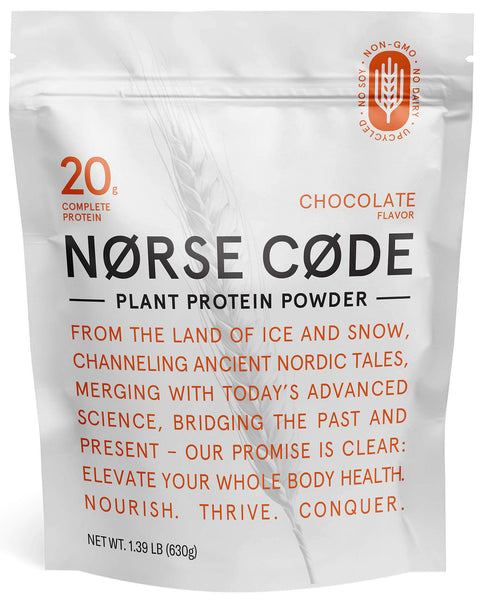
Most protein powders that look clean still hide one of two things: sugar alcohols for sweetness, or gums for texture. Both are cheap, both do their job inside the bag, and both are common reasons a shake leaves people gassy or bloated. A formula that genuinely skips both is rarer than the front of the label suggests, because the ingredients that replace them cost more. Here's what sugar alcohols and gums actually do, why acacia fiber is the exception worth understanding, and how to read a panel so you can tell the difference. We built NØRSE CØDE to pass that test: 20g of protein, 9 ingredients or less, no sugar alcohols and no added gums.
Why sugar alcohols and gums are in almost every protein powder
Both solve a manufacturing problem cheaply. Sugar alcohols like erythritol and xylitol deliver sweetness with few or no calories and a "sugar-free" label, so a brand can sweeten a shake without adding sugar or reaching for an artificial sweetener people distrust. Gums like xanthan and guar give a thin plant-protein mix a thicker, creamier feel, and they keep a ready-to-drink formula from separating on the shelf.
Neither is added for your benefit. They're added because they're inexpensive and they make the product easier to sell: a powder that tastes sweet and pours thick moves off the shelf better than one that doesn't. Once the cheapest sweetener and the cheapest thickener become the category default, most brands follow. "Clean" comes to mean "no artificial colors" on the front of the bag; what your gut has to work around stays off it.
What sugar alcohols do once they reach your gut
Most sugar alcohols are poorly absorbed in the small intestine, so a meaningful share travels to the large intestine, where gut bacteria ferment it and it draws water in behind it. That fermentation and water shift is the actual mechanism behind the gas, bloating, and loosening that sensitive people report, which is why the FDA allows a laxative-effect notice on foods that use them. Sorbitol, xylitol, and maltitol are the usual offenders here. If a shake reliably leaves you bloated, the sweetener system is one of the first places to look, and we go through the rest in our guide to protein powder and bloating.
Erythritol is the partial exception: it's absorbed more completely and largely excreted unchanged, so it tends to cause less digestive upset than the others. It carries a different question instead. A 2023 study published in Nature Medicine by Cleveland Clinic researchers reported an association between higher blood-erythritol levels and cardiovascular events. It's an early signal that needs more research, but enough that a lot of label-readers started avoiding it too. Between the digestive effects of the fermentable polyols and the open questions around erythritol, "no sugar alcohols" became something people search for on purpose.
The gums people actually react to
The gums used as thickeners and stabilizers are a short list: xanthan gum, guar gum, gellan gum, cellulose gum (carboxymethylcellulose), and carrageenan. Their job is texture. Guar and xanthan are fermentable, so at the doses used to thicken a shake they can produce gas and bloating in people with a sensitive gut, the same fermentation story as the sugar alcohols above. Carrageenan is the one many people avoid outright, because animal research has linked it to gut irritation; regulators still permit it, but "no carrageenan" has become its own label demand.
A trickier case is inulin, also sold as chicory root fiber. It's added so a label can advertise fiber, but it's one of the most fermentable fibers there is, which makes it a frequent and underestimated bloat trigger. So a powder can be free of xanthan and guar and still upset your stomach because of the "fiber" it's proud of. The type of fiber matters as much as the gums do.
But isn't acacia fiber a gum?
It's a fair question, and skipping it would be dishonest, so here's the straight answer. Acacia fiber is also called gum arabic, and it belongs to the same plant-gum family as the ingredients we're avoiding. Xanthan, guar, and carrageenan are added as thickeners and stabilizers, changing how a product feels and how long it holds together. Acacia fiber has a separate job in our formula: it's a prebiotic soluble fiber, feeding gut bacteria.
It also behaves differently in the gut. Acacia has been studied as a well-tolerated prebiotic that produces noticeably less gas than highly fermentable fibers like inulin at comparable amounts, because it ferments slowly and gently. That's why we use it. So when we say NØRSE CØDE has no added gums, we mean no thickening gums: xanthan, guar, gellan, cellulose gum, carrageenan. Acacia fiber shares a name with that category and a different job in the formula. We wanted to spell out the distinction plainly.
What a formula uses instead when it skips both
Skip the sugar alcohols and you still have to sweeten the shake, so the honest swap is allulose plus a little monk fruit extract. Allulose matters to this specific page because it is a rare sugar. It's absorbed in the small intestine before gut bacteria get to it, so it sidesteps the exact mechanism that makes sugar alcohols bloat people. Monk fruit rounds out the sweetness without the aftertaste some sweeteners leave behind. Neither one is a sugar alcohol, which is what lets the formula be genuinely sweet and genuinely sugar-alcohol-free at the same time.
Skip the gums and you still need the shake to feel like something. We get body from a little MCT oil, which comes from coconut (Contains: Coconut), and mouthfeel from the acacia fiber doing double duty. The result is that our SmoothBlend formula dissolves smooth in any liquid with no chalk and no grit, without a thickening gum forcing the texture. It costs more to build a shake this way than to reach for xanthan and erythritol, and that cost is the real reason most brands don't.
How to read a label so you actually avoid them
Ignore the front of the bag and read the ingredient panel, because that's the only part that has to tell the truth. For sugar alcohols, scan for the names, most of which end in "-ol": sorbitol, xylitol, maltitol, mannitol, isomalt, and erythritol. For gums, look for xanthan gum, guar gum, gellan gum, cellulose gum or carboxymethylcellulose, methylcellulose, and carrageenan. If you're also watching for a hidden bloat trigger, note whether the fiber listed is inulin or chicory root.
Here's the trap: a front label reading "no artificial sweeteners" tells you nothing about sugar alcohols, because sugar alcohols aren't artificial sweeteners, and it says nothing about gums at all. The same goes for "natural" and "clean." Read the panel, because that's where the actual chemistry shows up. If none of the "-ol" sweeteners and none of the thickening gums appear on it, the formula genuinely skips both.
The formula we built around this
Twenty grams of protein per serving, 9 ingredients or less, no sugar alcohols and no added gums, sweetened with allulose and monk fruit, with prebiotic fiber from acacia doing the texture work. We make NØRSE CØDE ourselves in our own facility in Petaluma, California, and third-party test every batch for heavy metals, so the panel matches what's actually in the bag. One scoop plus any liquid, no blender needed.
Ready to try it?
Backed by a 60-day money-back guarantee. If it is not the smoothest protein you have had, send it back.
Shop NØRSE CØDE