Updated: August 12, 2026
NØRSE CØDE is a protein powder without artificial sweeteners: it's sweetened only with allulose and monk fruit extract, both flavors are zero sugar, and it never contains sucralose, acesulfame potassium, or aspartame. Those three names are the ones to check for on any bag. "Sugar-free" on the front tells you nothing about which sweetener did the work. Check the ingredient panel. That's where the truth lives.
What counts as "artificial" here
Three names cover almost every artificially sweetened protein powder: sucralose (sold as Splenda), acesulfame potassium (Ace-K, Sunett, sometimes "Sweet One"), and aspartame (Equal, NutraSweet). All three are zero-calorie, all three are many times sweeter than sugar by weight, and all three are FDA-approved with a defined acceptable daily intake. Stevia and monk fruit are a different category entirely. They come from a plant and don't carry the same regulatory or research profile, so a bag can honestly say "plant-based sweetener" and still contain sucralose in the same blend. Stevia has its own well-documented aftertaste issue, covered in our guide to why a genuinely stevia-free formula is so hard to find.
Where they hide on the label
Sucralose and acesulfame potassium are frequently used together in the same formula. Finding one on the label is a reason to look harder for the other; they're often listed side by side. The ingredient panel is the only place that tells the truth. "No added sugar" and "sugar-free" both describe sugar. Neither one says a word about sucralose, Ace-K, or aspartame. If none of those three names show up on the panel, the powder is free of them. Full stop.
Why people go looking for this
Taste is part of it. Sucralose and acesulfame potassium both carry a distinct aftertaste some people notice right away.
The bigger reason is what the research has started to say. In 2023, the World Health Organization reviewed the evidence on non-sugar sweeteners and recommended against using them for weight control, citing long-term links to type 2 diabetes and heart disease. That same year, the International Agency for Research on Cancer classified aspartame as "possibly carcinogenic to humans," a limited-evidence finding based on liver cancer studies. It doesn't mean your morning shake is dangerous. It does explain why a lot of people started reading labels differently.
Separately, lab research has found sucralose can shift gut bacteria populations in some studies, though the findings are mixed and dose dependent. An occasional diet soda isn't the concern here. A daily protein shake, every morning for years, is a different exposure question, and it's the real reason someone goes looking for this in the first place.
What we use instead, and why it costs more
NØRSE CØDE is sweetened with allulose and monk fruit extract. About 70% of allulose is absorbed directly in the small intestine, and what's left mostly resists fermentation by gut bacteria, unlike sugar alcohols such as erythritol and xylitol. A 2022 sensory study found monk fruit's main sweet compound produces significantly less bitterness and metallic aftertaste than stevia's.
Both cost more to formulate with than sucralose or acesulfame potassium. That's the real reason so few brands make the switch. The cheap sweeteners work. Swapping them out doesn't show up as a headline claim the way "20g protein" does, so it rarely gets done. We did it anyway, and kept the label short: about 9 natural ingredients you'd recognize, no gums, no fillers.
The checklist
Which protein powders have no artificial sweeteners? Any bag where none of these three names appear anywhere on the ingredient panel, ours included. Run this on any bag you're holding:
- Flip to the ingredient panel. Never trust the front of the bag.
- Scan for "sucralose," "acesulfame potassium" (or Ace-K / Sunett), and "aspartame" by name.
- If one of those three appears, assume the others might too and keep reading. They're commonly blended together.
- A "sugar-free" or "no added sugar" claim tells you nothing about artificial sweeteners either way.
- Plant-derived sweeteners (stevia, monk fruit, allulose) are a different category from artificial sweeteners, with their own aftertaste and cost questions.
- If none of those names show up anywhere on the panel, the bag is genuinely free of them.
Where NØRSE CØDE lands on this
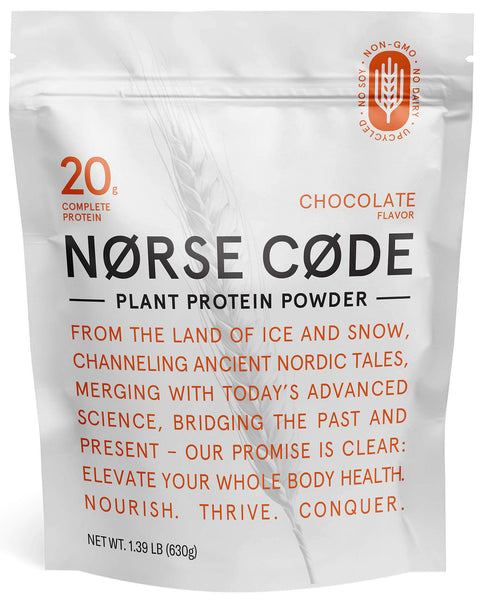
Twenty grams of protein per serving. About 9 natural ingredients total. Allulose and monk fruit extract are the only sweeteners in the bag, plus prebiotic fiber from acacia. Both flavors are zero sugar: no cane sugar, no added sugar of any kind. It wets evenly in one stir, hot or cold, in any liquid, no blender and no recipe needed. We make it ourselves in our own facility in Petaluma, California, and third-party test every batch for heavy metals.
Backed by a 60-day money-back guarantee, no questions asked, and it ships same day when you order by noon PT.
Ready to try it?
Backed by a 60-day money-back guarantee. If it is not the smoothest protein you have had, send it back.
Shop NØRSE CØDE