Stevia shows up in most protein powders because it's the cheapest way to cut sugar without cutting sweetness — but a real aftertaste, not a trend, is why so many people go looking for a powder without it. A genuinely stevia-free formula is rarer than the marketing suggests, because the alternatives that taste clean cost more to use. Here's the actual mechanism behind the aftertaste, what "stevia-free" alternatives really deliver, and how to check a label instead of trusting the front of the bag.
Why do so many protein powders use stevia?
Stevia is zero-calorie and far sweeter than sugar by weight, so a brand needs almost none of it to hit the same sweetness — cheaper than sugar, and it carries a "natural" label many people trust more than an artificial sweetener like sucralose. That cost-and-perception combination is why it became the default across the category.
It's not a formulation choice made for your benefit; it's a margin choice that happens to carry a natural-sounding name. Highly purified steviol glycosides picked up GRAS status starting in late 2008, which opened the door for supplement brands to lean on stevia the same way soda and yogurt brands already had. Once one major brand in a category adopts the cheapest sweetener, the rest tend to follow — which is how stevia went from a niche leaf extract to the default assumption on a protein powder label.
Why does stevia taste bitter or leave an aftertaste for some people?
Researchers at the Technical University of Munich found that steviol glycosides — the sweet compounds in stevia — activate two specific bitter-taste receptors on the human tongue, which is what produces the lingering bitter or licorice-like aftertaste some people notice. It's a receptor-level reaction, not pickiness.
A 2015 Cornell follow-up confirmed the specific compound most commercial stevia extracts use, rebaudioside A, still triggers those same receptors enough to leave "a speck of bitterness" — their words for describing why food scientists have spent years trying to engineer it out rather than simply using less. The aftertaste isn't inconsistent formulation or a bad batch; it's the compound itself interacting with taste biology that varies from person to person, which is why one person's "can't taste it at all" is another person's "ruins the whole shake."
Is stevia bad for digestion?
Not on its own — the digestive complaints usually blamed on stevia almost always trace back to sugar alcohols like erythritol or xylitol, which are added alongside it as a bulking filler in most commercial blends. Pure stevia has no comparable gut-distress mechanism; the filler next to it does.
Erythritol and xylitol are poorly absorbed in the small intestine, so a meaningful share passes through to the gut, where it draws in water or ferments — the actual cause of the gas and bloating people report. Stevia rarely appears alone on a label; it's almost always paired with one of these bulking agents to round out the mouthfeel a pure stevia extract can't provide by itself. So "stevia protein powder gives me gas" is usually accurate as an observation and wrong as a diagnosis — the erythritol next to it on the ingredient panel is the more likely cause.
Is stevia actually safe? What does GRAS mean?
Highly purified steviol glycosides (95%+ purity) have GRAS status in the US, meaning the FDA hasn't objected to safety determinations manufacturers submitted since late 2008. Whole-leaf stevia and crude extracts do NOT have that same status — a distinction worth knowing, since GRAS isn't the same thing as formal FDA approval.
GRAS is a self-affirmation process: a company submits its own safety data, and the FDA either objects or doesn't. Since 2008, the FDA has raised no objections to more than fifty separate GRAS notices covering different steviol glycoside preparations from different manufacturers — an ongoing, incremental pattern rather than one blanket approval covering "stevia" as a category. The purified extracts used in food today are a narrow slice of the plant, not the leaf itself.
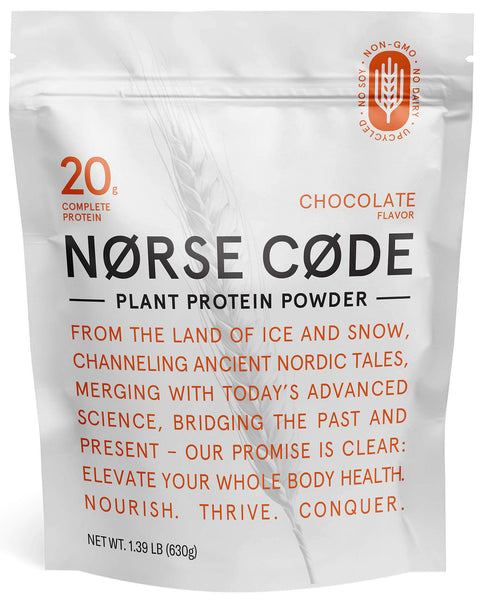
NØRSE CØDE Plant Protein
20g protein per serving, dissolves in any liquid, no blender needed.
Shop NØRSE CØDE
What do brands use instead of stevia?
The two real stevia-free alternatives are monk fruit (mogroside V, which scores lower on bitterness in comparative taste research) and allulose, a rare sugar absorbed in the small intestine rather than fermented in the gut — so it skips both the aftertaste problem and the sugar-alcohol digestive issue at once.
Monk fruit extract is roughly comparable to stevia in sweetness intensity without the same bitter-receptor activation, which is why it shows up as the more expensive "premium" stevia substitute. Allulose behaves closer to real sugar on the tongue and in the body — it's absorbed rather than fermented, which is the structural reason it doesn't carry the digestive risk sugar alcohols do. We use allulose and monk fruit extract instead of stevia in NØRSE CØDE for exactly this reason: it costs more than reaching for stevia, and that cost is why so few brands bother.
Does going stevia-free mean giving up sweetness entirely?
No — it means the sweetener comes from a different source, not that the formula goes unsweetened. Monk fruit and allulose both deliver real sweetness without stevia's aftertaste risk; the tradeoff is cost, which is exactly why most brands don't bother switching.
A protein powder built around allulose and monk fruit instead of stevia isn't unsweetened or bland by design — it's built to taste like a normal shake without the specific bitter aftertaste some people can't get past. The tradeoff shows up on the invoice, not in the glass: these alternatives cost the manufacturer more per batch, which is the real reason so few brands make the switch even though the sweetness itself doesn't suffer for it.
Why is a genuinely stevia-free protein powder so hard to find?
Because the alternatives cost more to formulate with and stevia is cheap enough that most brands have no financial reason to leave it out. "Stevia-free" is common as a marketing phrase; a formula that actually skips it — and every stevia-adjacent filler — is the rarer thing.
It's a cost decision dressed up as a formulation one. A brand can swap stevia for monk fruit or allulose and pass the higher ingredient cost along, or it can keep stevia and market around the aftertaste with flavor additives instead. We built NØRSE CØDE with 9 natural ingredients or less on the label specifically so there's nowhere for a sweetener workaround to hide — no stevia, no sugar alcohols, no gums, made in our own facility in Petaluma, California.
What should I check on the label if I want to avoid stevia?
Read past the front of the bag: stevia shows up as "stevia leaf extract," "rebaudioside A" or "Reb A," or "steviol glycosides" on the ingredient panel, sometimes alongside erythritol as a bulking agent. If none of those three terms appear, the formula is genuinely stevia-free, not just marketed that way.
A front label that says "no artificial sweeteners" says nothing about stevia one way or the other — stevia is plant-derived, so it passes that claim easily while still being the ingredient you were trying to avoid. The ingredient panel is the only place that tells the truth; the marketing copy above it is optimized to sound clean regardless of what's actually inside.
The formula built around this problem
Twenty grams of protein per serving, 9 natural ingredients or less, no stevia, no sugar alcohols, no gums or fillers — allulose and monk fruit extract instead, plus prebiotic fiber from acacia. We make NØRSE CØDE ourselves in our own facility in Petaluma, California, and third-party test every batch for heavy metals, so the label matches what's actually in the bag.
Ready to try it?
Backed by a 60-day money-back guarantee. If it is not the smoothest protein you have had, send it back.
Shop NØRSE CØDE