A clean protein powder means a short, recognizable ingredient list with nothing added just to patch a cheap manufacturing shortcut, and nothing added to mask a taste or texture problem instead of solving it. That's the standard we hold NØRSE CØDE to: 9 natural ingredients or less or less, no gums, no artificial sweeteners. Here's exactly what to check on any label, ours included.
What does "clean" actually mean on a protein powder label?
"Clean" isn't a legal term, so it's worth defining before you use it: a short ingredient list you can read once and understand, nothing added just to patch a cheap manufacturing shortcut, and nothing added to mask a taste or texture problem instead of solving it.
The check that transfers to any brand: read the ingredient panel top to bottom, once. For every line, ask what job it's doing. Protein sources and a sweetener are self-explanatory. A line you can't explain in one sentence is the one worth looking up before you buy. We built NØRSE CØDE around this exact test: 9 natural ingredients or less or less, and we can tell you what every one of them is for.
Should you avoid artificial sweeteners in a protein powder?
If you're going for clean, yes. Artificial sweeteners are the single most common ingredient we'd flag on a label, and the easiest one to check for by name: sucralose, acesulfame potassium, and aspartame are the three to scan for first.
They're common because they're cheap and sweeten hard, but they're also the ingredient most people report an aftertaste or a stomach reaction to. We use monk fruit extract and allulose instead. They replace artificial sweeteners entirely, and vanilla lands at zero grams of sugar without them. Whatever bag you're holding, this is a two-second label check worth making every time.
Are sugar alcohols and stevia a problem in protein powder?
Not automatically, but they're worth knowing you're getting. Sugar alcohols like erythritol and xylitol can cause digestive upset for a lot of people at shake-sized doses, and stevia's aftertaste is polarizing enough that it's worth tasting a sample before you commit to a full bag.
Neither is unsafe, and plenty of people tolerate both fine. But if you've had a protein powder that left you bloated or gave you a strange aftertaste, one of these two is usually why. NØRSE CØDE uses neither: no stevia, no sugar alcohols, just monk fruit and allulose.
Why do so many protein powders use gums and stabilizers?
Gums like xanthan or carrageenan are usually there to keep a thin protein blend from separating or to fake a thicker mouthfeel. They're not dangerous at typical doses, but their presence is a tell: the protein blend underneath needed help holding together.
That's a formulation choice, not a scandal. A lot of brands lean on gums to get a smoother, thicker shake without reworking the protein source itself. It's one way to get there. We solved dissolving and texture a different way: no gums or stabilizers, and the blend still wets evenly in any liquid with a stir.
How many ingredients should a clean protein powder have?
There's no magic number, but a useful gut check is whether you can name what each ingredient is doing. A protein powder built around a handful of natural ingredients, each with a clear job, reads very differently than a label with fifteen-plus lines and half of them stabilizers.
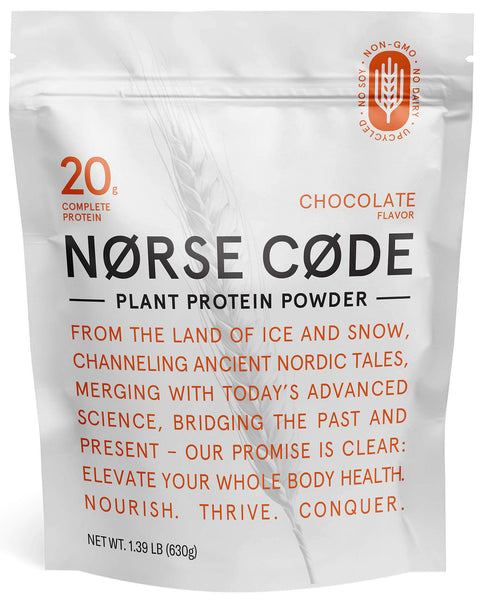
Ours has 10 or less: three plant proteins (pea, rice, barley), a sweetener pair, acacia fiber for a prebiotic boost, MCT oil for a little creaminess, natural flavor, and calcium carbonate. Every one of those has a stated job in the Consumer Ingredient Explanations further down our site, because a clean label should be legible, and short is a side effect of that.
Is a short ingredient list a sign a protein powder won't mix well?
No, and this is a common misread. A short list is a formulation choice, not a shortcut that costs you mixability. It just means the brand solved dissolving and texture a different way instead of leaning on gums and emulsifiers to fake it.
We spent over 1,000 formulation iterations getting NØRSE CØDE to wet evenly in any liquid, hot or cold, with a stir and no blender, without adding a single gum to get there. A long ingredient list with lots of stabilizers is one way to chase good texture. A shorter list, formulated harder, is the other.
What third-party testing should you look for?
Look for a brand that states plainly whether it third-party tests for contaminants like heavy metals, not one that's vague about testing at all. You're checking for the practice, not asking to see the raw data; most brands, including ours, test every input but don't publish individual results.
A brand dodging the question entirely, or answering with marketing language instead of a yes-or-no, is worth a second look. We third-party test every input for heavy metals; like most brands in the category, we don't publish the individual numbers, but we'll always tell you plainly that the testing happens.
Is "natural flavors" on the label something to worry about?
Not by itself. "Natural flavors" means the flavor compound is derived from a real source (a plant, a fruit, a bean) rather than synthesized, which is the opposite of an artificial flavor. It's a vague line on a label, but a legal category, not a red flag on its own.
It's fair to want more specificity, and we get that pushback. In our case, natural flavors has one job: rounding out the real vanilla extract or cocoa powder so the shake tastes like food, not formula. If a brand won't tell you what the natural flavor is doing in the recipe, that's a better question to press than the phrase itself.
Conclusion
Read the label top to bottom once. Flag artificial sweeteners (sucralose, acesulfame potassium, aspartame) first: they're the most common thing to avoid. Note whether sugar alcohols or stevia are present, not because they're unsafe but because they're common causes of bloating and aftertaste. Check for gums or stabilizers, which usually mean the protein blend needed help holding together. Count roughly how many ingredients are on the list and whether you can explain what each one does, and ask plainly whether the brand third-party tests its inputs. We built NØRSE CØDE to pass every one of those checks on our own label.
If heavy metals are the part of the label you actually came for, that check has its own page: the best vegan protein powder brands for avoiding lead and heavy metals goes through nine brands and what each one does about it.
Ready to try it?
Backed by a 60-day money-back guarantee. If it is not the smoothest protein you have had, send it back.
Shop NØRSE CØDE