Updated: August 23, 2026
For gut comfort, yes: plant protein is usually easier than whey, because it carries no lactose. That only holds if the plant powder hasn't swapped in gums and sugar alcohols to fix its texture, which ferment in your gut the same way lactose does. NØRSE CØDE uses neither. Prebiotic acacia fiber gives our shake its body instead.
Whey does score higher on the standard lab measure of protein quality. That is a separate question from how a shake sits, and if bloating is your complaint, the ingredient panel is where the answer is.
Is plant protein easier to digest than whey?
For gut comfort, usually yes, because plant protein carries no lactose, whey's most common trigger. For protein quality as a lab measures it, whey scores higher. Most people asking this question mean comfort, and comfort depends as much on the rest of the formula as on the protein source.
Those are two different scorecards, and quick answers online tend to run them together. Comfort is about symptoms after drinking a shake: bloating, gas, a weight in the stomach an hour later. Protein quality is a lab measurement of digestibility and amino acid profile. A protein can rank well on one and be unremarkable on the other. If your complaint is that whey bloats you, you are asking a comfort question, and removing dairy usually helps for a plain reason: it removes the ingredient causing the reaction.
Why does whey protein cause bloating for some people but not others?
Whey is a dairy protein, and most adults lose some ability to digest lactose (milk sugar) as they age. Undigested lactose reaches the colon, where gut bacteria ferment it into gas. People with more lactase enzyme still available handle whey fine; people with less get bloating, gas, or discomfort.
This is a normal biological shift. According to a StatPearls (NCBI Bookshelf) clinical reference, globally 65% to 70% of the population exhibits lactose intolerance, most commonly in its primary form after infancy, though not everyone who has it gets symptoms. So a whey drinker who does react is in familiar company. The reaction also depends on dose: the same person can drink a latte comfortably and bloat on a whey shake, which carries a much larger lactose load.
Is plant protein automatically easier on your stomach?
No. Cutting lactose removes one trigger. A plant protein thickened with gums or sweetened with sugar alcohols ferments in the gut the same way, so it can bloat just as badly. What decides how a plant powder sits is the whole ingredient list.
"Plant-based" gets read as shorthand for "gentle." The real predictor sits further down the panel. A pea or rice protein with a gritty base texture often gets patched with gums to fake a smooth mouthfeel, and gums ferment in the gut much as unabsorbed lactose does. We took a different route on NØRSE CØDE: our SmoothBlend formulation dissolves clean in any liquid with a stir, so there is no gum on our label doing texture repair, and no sugar alcohol cutting sugar.
Why does acacia replace the gums other powders use?
Acacia fiber does two jobs on our label at once. It is a prebiotic fiber, and it is what gives the shake its body, the thickness that makes it feel like food rather than powder. Covering both jobs with one ingredient is how the whole list stays at nine natural ingredients or less.
One thing worth knowing when you read any panel: acacia is sometimes printed as acacia gum. It is a soluble fiber, and a different ingredient from xanthan and guar, which go in purely to thicken.
Does plant protein absorb as well as whey protein?
On the standard protein-quality measure (DIAAS), whey isolate and concentrate score above pea and soy, per a 2017 British Journal of Nutrition study. That measure combines digestibility with amino acid profile, and it says nothing about GI comfort, which is a separate question with a separate answer.
The study was run in growing pigs, the standard animal model for this kind of digestibility work, and found most of the essential amino acids in whey isolate and concentrate scored above pea protein concentrate and soy protein isolate. That is a real difference, and it is a difference in what a lab can measure about a scoop of powder. Whether you can drink one every morning is a separate matter, settled by the rest of the formula.
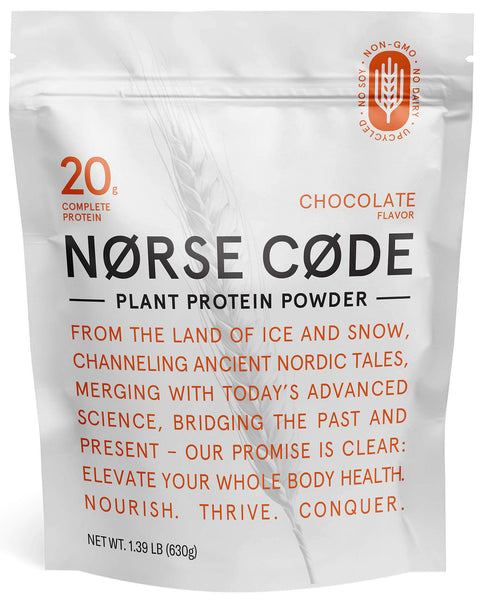
NØRSE CØDE Plant Protein
20g protein per serving, dissolves in any liquid, no blender needed.
Shop NØRSE CØDE
What ingredients in a plant protein powder can cause digestive issues?
The usual culprits are added gums and thickeners (xanthan, guar, carrageenan) used to fake a smooth mouthfeel, and sugar alcohols added for a sugar-free sweet taste. Both ferment in the gut similarly to unabsorbed lactose, producing the same gas and bloating a dairy-sensitive person gets from whey.
Gut bacteria ferment these ingredients much as they ferment lactose, which is why a switch to "plant-based" can leave the symptom exactly where it was. NØRSE CØDE runs 9 natural ingredients or less with no artificial sweeteners, gums, or fillers, 0g of total and added sugar in both flavors, and acacia carrying the fiber.
What our customers say about how it sits
People who drink it write to us about this without being asked. Three, from our own store, in their own words:
"This is the first plant protein powder I've tried that doesn't make me gassy or bloated. The chocolate tastes great and I drink it almost every day and still love it."
"It tastes awesome, I love how easy it is to mix and go, I love the protein and fiber content, no funky aftertaste, and it doesn't bother my stomach."
"Chocolate was very smooth and creamy, with no upset stomach or burps."
Taste is the other reason people stop drinking a protein powder. In a blind taste test, more people chose NØRSE CØDE than Orgain and Optimum Nutrition Gold Standard 100% Whey combined.
Can whey protein isolate be easier to digest than some plant proteins?
Yes, in a specific case. Whey isolate is filtered to strip out most of the lactose that concentrate carries, so a lactose-sensitive person may tolerate isolate fine and still react to a plant powder built on gums or sugar alcohols. Someone dairy-sensitive can land either way, depending on what else is in the tub.
That extra filtering step is the whole reason some lactose-sensitive people do fine on isolate and badly on concentrate. It also means the reverse case is real: the same person can react to a plant powder whose gums and sugar alcohols reintroduce the fermentation they left dairy to escape.
What should I check on the label if digestion is my main concern?
Look past the protein source for added gums, sugar alcohols (sorbitol, mannitol, maltitol, xylitol), and a long stabilizer list, on whey and plant powders alike. A short ingredient list is the single most useful signal you have here.
Nine items you recognize reads differently from twenty you don't, whether the first one is whey or pea protein. If dairy is already ruled out and a "gentle" plant powder still bothers you, the gums and sugar alcohols further down that same panel are the next thing to look at.
Is there a protein type that's easiest to digest for everyone?
No single protein source is easiest for everyone; tolerance is individual. Someone with no lactose issues may do fine on whey concentrate. Someone dairy-sensitive needs a plant or whey-isolate option, and even then only one that skips the gums and sugar alcohols that cause a second round of bloating.
Digestion depends on your own lactase levels, gut sensitivity, and which additives a given formula leans on, so the reliable approach is elimination. Rule out dairy if whey bothers you, then read the panel on whatever comes next, because a badly formulated plant powder can bring the same symptoms back from a different direction.
Try it and judge for yourself
We built NØRSE CØDE dairy-free from the first batch, then spent two years and more than 1,000 iterations getting the texture right without a gum or a sugar alcohol. Nine natural ingredients or less, nothing artificial, 0g sugar, acacia doing the fiber work. We make it ourselves, in our own facility in Petaluma, California. We third-party test every input for heavy metals.
The 60-day money-back guarantee covers a proper trial, which is about two weeks of ordinary mornings. Order by noon and it ships the same day.
Ready to try it?
Backed by a 60-day money-back guarantee. If it is not the smoothest protein you have had, send it back.
Shop NØRSE CØDE
Sources