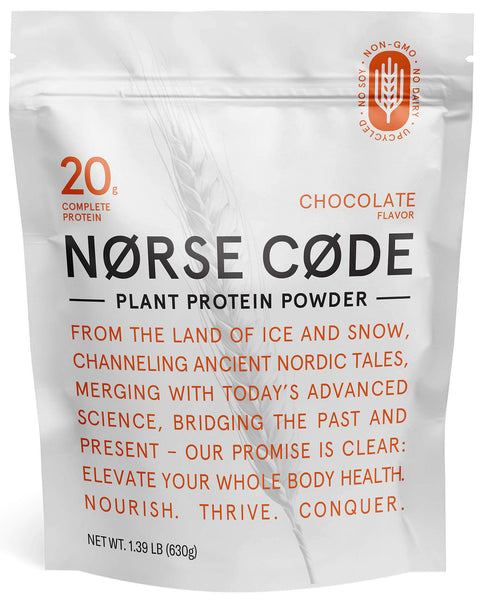
If whey protein leaves you gassy, bloated or crampy, the protein itself is usually the trigger.[1] The flavor and the brand rarely change that. NØRSE CØDE is built from pea, rice and barley protein, so there's no whey or dairy protein in the bag at all.
Check the tub in your cupboard. If the first ingredient traces back to milk, that's the likely cause, whichever name is on the label.
How it sits
A customer told us this directly: "This is the first plant protein powder I've tried that doesn't make me gassy or bloated. The chocolate tastes great and I drink it almost every day and still love it." (customer review, 5★, January 2026)
Part of that is simply having no whey in the formula. The other part is what we put in instead: 5g of fiber per serving, including prebiotic acacia. Acacia is a soluble fiber, the kind that swells slightly and moves through digestion instead of sitting heavy, which is a large part of why the shake feels like a normal drink rather than something your stomach has to process. It does the same texture work as the gums most plant proteins lean on, and it isn't one.
The spec table
Figures for Optimum Nutrition Gold Standard 100% Whey Protein Powder come from the label and optimumnutrition.com, accessed July 13, 2026.
| Spec |
NØRSE CØDE |
Optimum Nutrition Gold Standard 100% Whey Protein Powder |
| Protein per serving |
20g |
24g |
| Protein source |
Pea, rice and barley (plant, dairy-free) |
Whey protein isolate, concentrate and hydrolyzed whey (dairy) |
| Ingredient count |
Only 9 natural ingredients |
7 named ingredients (Double Rich Chocolate label) |
| Artificial sweeteners |
None |
Acesulfame potassium; natural and artificial flavor |
| Gums or fillers |
None |
Sunflower and/or soy lecithin (emulsifier); no gums |
| Fiber |
Prebiotic acacia fiber |
Not a notable fiber source |
| Allergens |
Contains: Coconut. Dairy-free. |
Contains: Milk, Soy |
| Servings per container |
14 (single bag) |
73 (5 lb tub) |
| Third-party testing |
Every input, for heavy metals |
Informed Choice certified facilities; Banned Substance Tested |
| Guarantee |
60 days, money back, no questions asked |
60-day satisfaction guarantee |
| Price per serving |
$2.54–$3.57 (8-bag subscription to single bag) |
About $1.35 (5 lb tub) |
| Product type |
A plant protein shake, pea/rice/barley |
A whey-based protein shake, dairy |
The price gap tracks the ingredients on each label, not who runs the equipment: pea, rice and barley protein costs more to buy than whey does. What that buys a sensitive stomach specifically is a shorter, more controlled formula, with fewer total inputs that could also turn out to be part of the problem.
Does giving up whey mean giving up taste?
It's the worry that stops a lot of people from switching: that quitting whey trades a shake they liked for one that's chalky or thin. Stir a scoop into a glass of oat milk after work, or into coffee before the gym, and it dissolves flat with the spoon already in the drawer. Nothing settles gritty at the bottom five minutes later, so there's no second stir before the last third of the glass. A blind test measured that directly against whey: it included Orgain and Gold Standard, and more people chose NØRSE CØDE than the other two combined.
Not every whey-free protein is gentle
Cutting out whey doesn't automatically fix the problem, because plenty of plant proteins add their own trigger back in: xanthan gum, guar gum or carrageenan to stop the powder settling, sugar alcohols to sweeten it without sugar. Those are common causes of gas and bloating in their own right, separate from anything to do with dairy. NØRSE CØDE uses none of them, sweetened instead with allulose and monk fruit, and the acacia fiber above does the thickening job a gum would otherwise do. Getting that combination to dissolve without a gum took over a thousand formulation iterations, which is why we still make every batch ourselves in Petaluma rather than handing the recipe to a co-packer.
Related questions people ask
Can a milk allergy and whey sensitivity be two different things?
Yes. A true milk allergy is an immune reaction, usually shows up fast, and can be serious. Whey sensitivity is milder and slower: gas, bloating or cramping an hour or two after the shake, with no allergic reaction involved. Both point away from whey, but only one needs a doctor to rule out first.
Will I get less protein switching from whey to a plant protein?
Per scoop, a little: NØRSE CØDE is 20g against a typical whey's 24g. Most people don't notice the missing 4 grams, because they finish this shake and used to leave the other one half-drunk in the fridge.
How long after switching off whey does the bloating usually stop?
For most people, the next shake. If it doesn't, check the new label for a gum or a sugar alcohol before assuming plant protein just isn't for you; those cause the same symptoms whey does, from a different source.
Sources
- [1] Precision Nutrition, "Whey sensitivity and intolerance: here's when whey protein just isn't for you," accessed 2026-09-16. https://www.precisionnutrition.com/whey-protein-allergies-intolerances-bloating
Conclusion
Start with one bag. Most people can tell within the first few shakes whether whey was the actual problem: no gas, no bloating, and you have your answer. The 60-day guarantee covers the two weeks it takes to be sure, no questions asked either way.
Ready to try it?
Backed by a 60-day money-back guarantee. If it is not the smoothest protein you have had, send it back.
Shop NØRSE CØDE