What is pea protein?
Pea protein comes from yellow split peas, the same ones sold dried in a bag at the grocery store. The peas are milled into flour, then the protein is pulled away from the starch and fiber, either by washing it out in water and adjusting the pH until the protein clumps and drops out (wet fractionation), or by a dry method that spins the milled flour so the lighter, protein-rich particles separate from the heavier starch.[1] What's left after either process is a fine, pale powder that's mostly protein by dry weight, with the starch, fiber and other plant compounds gone.[1]
What is pea protein's amino acid profile?
Pea protein runs high in lysine and threonine.[1] It runs low in the sulfur-containing amino acids, methionine and cysteine.[1] Rice protein happens to run the other way: low in lysine, higher in those sulfur aminos. That's the actual reason a lot of plant blends, ours included, pair pea with rice rather than using pea alone.
How well does the body actually digest pea protein?
A human trial measured pea protein's DIAAS (the current standard for how much of a protein's amino acids the body actually absorbs) at 1.00 against casein, a slow-digesting dairy protein, meaning it met the full amino acid requirement measured in that study.[2] Lab-only versions of the same test, which use a different method and don't involve a person eating anything, have come in lower, closer to 88 percent.[2] Both numbers describe the same protein measured two different ways.
Is pea protein better for the environment than animal protein?
By water use, yes, and by a wide margin. Growing beef takes about six times more water per gram of protein than growing peas.[1] Eggs, chicken and milk each take about one and a half times more.[1]
Why does pea protein bother some stomachs and not others?
This is usually a formulation question more than a pea protein question. What usually causes a shake to sit wrong is what got added to make a plain pea isolate mix and taste better: gums, thickeners, sugar alcohols. We build NØRSE CØDE without any of that, and we add prebiotic acacia fiber instead, the same fiber that shows up in the ingredient list of a lot of foods you'd never think twice about eating. One customer put it better than we could:
"This is the first plant protein powder I've tried that doesn't make me gassy or bloated. The chocolate tastes great and I drink it almost every day and still love it."
That's a report from one customer. We're not claiming pea protein does that for every stomach. If a shake has bothered you before, look at the fiber and the gums first. The pea itself is rarely the actual problem.
How does NØRSE CØDE actually use pea protein?
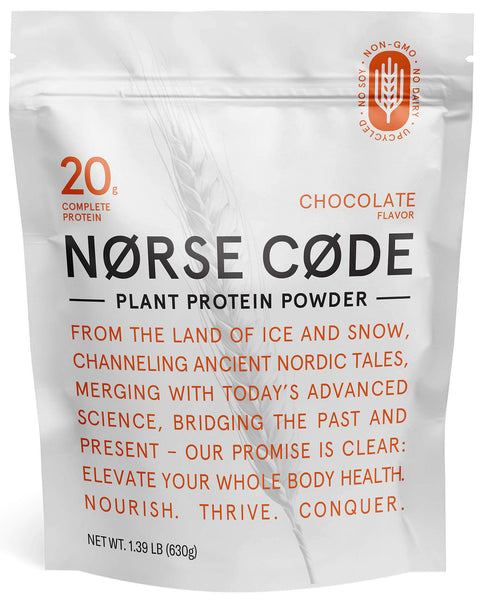
Pea is one of three protein sources in our blend, alongside rice and barley, inside a label of only 9 natural ingredients. No artificial sweeteners, no gums, no fillers. Allulose and monk fruit handle the sweetness, which is why both flavors land at 0g total sugar and 0g added sugar, with no sugar alcohol doing the work behind the scenes either. It dissolves in whatever you're already drinking, hot or cold, with a spoon, no blender. In a blind taste test, more people chose it over Orgain and Optimum Nutrition Gold Standard combined. That's also why the money-back window is 60 days: long enough to find out whether you'll actually finish the bag. We make it ourselves, in our own facility in Petaluma, California, which is also how we get to change something in the recipe in days instead of months if it isn't working. If you want the fuller ingredient-by-ingredient rundown against nine other vegan proteins, we ran that comparison here. Curious how the blend stacks up against a specific brand instead: Orgain and Vega Sport are the two closest side-by-sides we've published.
Sources
- [1] Wikipedia, "Pea protein," accessed 2026-09-25, citing *Sustainable Protein Sources* (2016) for the water-footprint figures. https://en.wikipedia.org/wiki/Pea_protein
- [2] "Real ileal amino acid digestibility of pea protein compared to casein in healthy humans: a randomized trial," ScienceDirect / *American Journal of Clinical Nutrition*, accessed 2026-09-25. https://www.sciencedirect.com/science/article/pii/S0002916522001459
Ready to try it?
Backed by a 60-day money-back guarantee. If it is not the smoothest protein you have had, send it back.
Shop NØRSE CØDE