Is soy protein vegan?
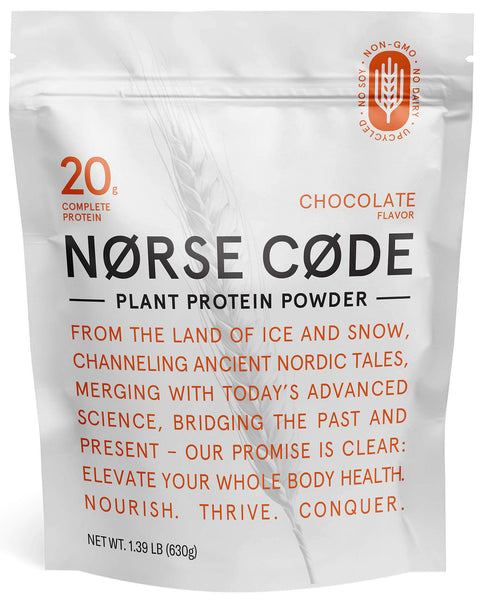
Yes. Soy protein is made entirely from soybeans, a plant, so it's vegan by any definition of the word. If you're vegan and shopping for a protein powder anyway, ours skips soy in the first place: NØRSE CØDE is built from pea, rice and barley protein, with none of the nine ingredients on the label coming from soy.
What is soy protein made from?
Soybeans are cleaned, dehulled and processed into flakes, then the oil is removed. What's left, defatted soy flour, gets processed further into soy protein concentrate (around 65-90% protein) or soy protein isolate (90%+ protein), depending on how much of the remaining fiber and carbohydrate gets washed out.[1] Isolate is the form most protein powders use: pulling out more of the non-protein material leaves less flavor behind to mask. A smaller amount is also sold as textured vegetable protein, the dried, rehydratable form used in some meat substitutes.
Does soy protein have a full amino acid profile on its own?
Yes, and it's one of the few plant proteins that can carry that on its own: soy protein isolate has been measured at a perfect protein quality score using PDCAAS, the same scale that rates eggs and whey at the top.[1] That's unusual for a single plant source. Most other plant proteins fall short on one or two amino acids and need a second source to fill the gap. That's the actual reason a pea protein powder is typically paired with rice or another grain rather than sold alone.
Why do some vegans avoid soy protein anyway?
A few reasons come up again and again, separate from whether soy protein is vegan. Soy is one of the most common food allergens, so it's an automatic no for anyone with that allergy. Most soybeans grown in the US are genetically modified, and some shoppers specifically want a non-GMO label regardless of the crop. Others just don't like the taste or texture of soy-based powders and would rather use a blend that skips soy entirely. NØRSE CØDE is Non-GMO Project sourced and doesn't use soy at all, so none of those reasons come up when you're reading our label.
Does soy protein cause bloating?
For some people, yes, though it's rarely the soy protein itself doing the damage. What usually causes a shake to sit wrong is what got added to make a plain isolate mix smoothly and taste better: gums, thickeners, sugar alcohols. We build NØRSE CØDE without any of that, and we add prebiotic acacia fiber instead, the same fiber that shows up in the ingredient list of foods most people eat without a second thought. One customer put it better than we could:
"This is the first plant protein powder I've tried that doesn't make me gassy or bloated. The chocolate tastes great and I drink it almost every day and still love it."
That's one customer's experience. It doesn't mean every stomach will react the same way. If a shake has bothered you before, the fiber and the gums are worth checking first.
What's the difference between soy protein and pea protein powder?
Soy protein comes from soybeans and can stand on its own as a complete amino acid source. Pea protein comes from yellow split peas and runs short on the sulfur-containing aminos, methionine and cysteine, which is why it's usually blended with a grain like rice to round out the profile. We use pea, rice and barley together, three sources inside a label of only 9 natural ingredients, with no artificial sweeteners, no gums and no fillers added to compensate for any one of them.
What should a soy-free vegan protein powder actually contain?
Look at what's doing the sweetening and what's doing the mixing, because that's usually where the extra ingredients hide. Ours uses allulose and monk fruit for sweetness, which is why both flavors land at 0g total sugar and 0g added sugar, with no sugar alcohol picking up the slack behind the scenes either. It's designed to dissolve in whatever you're already drinking, hot or cold, with a spoon and no blender.
Does a soy-free vegan protein powder taste as good as soy or whey?
It can. In a blind taste test, more people chose NØRSE CØDE than Orgain and Optimum Nutrition Gold Standard combined. Orgain's own protein also comes from peas and brown rice, so that result holds up against the plant-protein field. We make NØRSE CØDE ourselves, in our own facility in Petaluma, California, which is also how we get to change something in the recipe in days instead of months if a batch isn't tasting the way we want. If you want the fuller rundown against nine other vegan proteins, we ran that comparison here. Curious how the blend stacks up against a specific brand instead: Orgain and Vega Sport are the two closest side-by-sides we've published.
Sources
- [1] "Protein Digestibility-Corrected Amino Acid Scores (PDCAAS) for Soy Protein Isolates and Concentrate: Criteria for Evaluation," *Journal of Agricultural and Food Chemistry*, accessed 2026-09-27. https://pubs.acs.org/doi/10.1021/jf203220v
Ready to try it?
Backed by a 60-day money-back guarantee. If it is not the smoothest protein you have had, send it back.
Shop NØRSE CØDE