Protein needs go up with age; appetite and muscle both work against you after 60, and most people over 65 eat noticeably less protein than they did at 40. A powder only helps if it actually gets finished, which for an older stomach usually comes down to three things: whether it sits right, whether it needs a blender you have to clean, and how much sugar is riding along with the protein. Here's how ten real options answer those three questions.
NØRSE CØDE
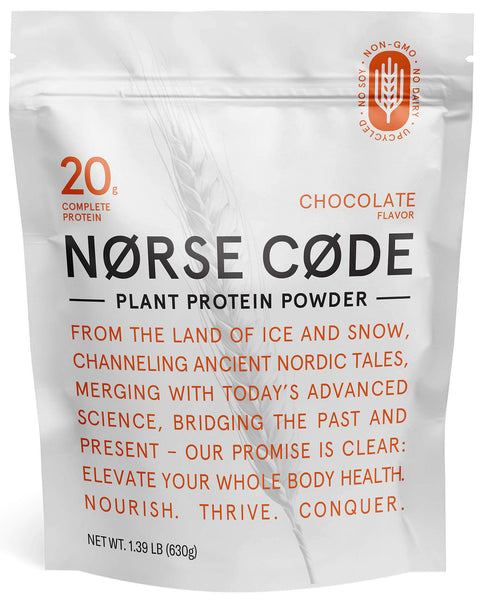
We built this one around the digestion problem first, which is the reason most people stop drinking a protein shake, usually long before the taste has anything to do with it. Prebiotic acacia fiber travels with the protein in the same scoop, and the whole thing stirs flat in a glass of milk or water with a spoon. Nine natural ingredients, no gums, made ourselves in our own facility in Petaluma, California, after more than a thousand formulation iterations over two years spent on exactly this problem. In a blind taste test, more people chose ours than Orgain, the other powder-in-a-glass option on this list.
The field, side by side
| Product |
Protein per serving |
Format |
Sweetener |
| NØRSE CØDE |
20g |
Powder |
Allulose, monk fruit |
| Orgain Organic Protein |
21g |
Powder, tub |
Stevia |
| Premier Protein |
30g |
Ready-to-drink bottle |
Sucralose |
| Ensure Original |
9g |
Ready-to-drink bottle |
Sugar |
| Boost High Protein |
20g |
Ready-to-drink bottle |
Sucralose |
| Garden of Life RAW Organic |
22g |
Powder, tub |
Stevia, monk fruit |
| Vega Protein & Greens |
20g |
Powder, tub |
Stevia |
| OWYN |
20g |
Powder, tub |
Monk fruit |
| Bob's Red Mill |
14g |
Powder, bag |
None |
| Ka'Chava |
25g |
Powder, tub |
Monk fruit, stevia |
Ten different answers to "how much protein, in what form, sweetened with what." The number in the first column tells you almost nothing on its own; the next few entries are about what the table can't show.
Orgain clumps if you drop it straight into a glass and stir, so a shaker bottle or a quick pass through a blender ends up being part of the routine whether the label mentions it or not.
Premier's dairy base is worth a second look for anyone whose stomach has gotten less patient with milk over the years, which is a lot of people by their sixties. The bottles do stack up in the recycling bin faster than you'd expect from something marketed as simple.
Ensure adds calories. The table above shows how little protein rides along with them.
Boost sits on the same shelf as Ensure, aimed at someone managing weight: more protein per bottle, a lot less of everything else.
Garden of Life's sprouted grains carry a taste some people notice right away and others never do; it's also NSF Certified for Sport, a mark aimed more at athletes checking for banned substances than at anyone here.
Vega folds a greens powder into the same scoop as the protein, so what you're drinking reads more like a green smoothie than a plain shake. Fine if that's what you wanted.
OWYN exists because someone needed a formula clear of all nine major allergens at once. It's a niche most shoppers never think about and a handful of families check first, before price, before flavor, before anything else on the label.
Bob's Red Mill skips the sweetener entirely; stirred into water it tastes closer to plain flour than anything from a tub. The appeal is the ingredient list: one line, nothing on it that needs explaining to a doctor.
Ka'Chava is a meal in a scoop. Fiber, greens, and adaptogens ride alongside the protein, and the full ingredient list runs past seventy items once every blend inside the blend gets counted separately. The scoop that ships in the bag is genuinely the size of a small ladle, which tells you something about how much is packed into one serving before the tub is even open. The price reflects a meal replacement, and for someone who actually wants a whole meal covered by one scoop, that's the honest comparison to make.
Choosing between them
Say a parent is just out of surgery and the doctor wants calories going in more than protein grams. Ensure or Boost do that job better than anything else on this page. Say dairy has started fighting back after sixty years of causing no trouble at all: that rules out Premier's whey base, whatever the protein count says. Say there's a food allergy at the table: OWYN's label gets read before any other tub comes off the shelf. And say the actual complaint is a shake sitting wrong two hours after it goes down: that's the case NØRSE CØDE was built for. One customer put it plainly: "This is the first plant protein powder I've tried that doesn't make me gassy or bloated. The chocolate tastes great and I drink it almost every day and still love it."
Ready to try it?
Backed by a 60-day money-back guarantee. If it is not the smoothest protein you have had, send it back.
Shop NØRSE CØDE
Two related questions are worth answering before you decide between them. How much protein does someone over 65 actually need? More than the standard RDA assumes, according to most current research on preserving muscle mass with age; we go through the actual math in how much protein adults over 50 need. And when the shake is standing in for a skipped meal rather than topping one up, the calculus changes again, covered directly in whether protein powder can work as a meal replacement.
Two of the products above have a full head-to-head elsewhere on this site: NØRSE CØDE vs Garden of Life goes deeper on the sprouted-blend tradeoff, and NØRSE CØDE vs Ka'Chava covers the meal-replacement question in full.