We hear this one from people standing in a kitchen at 7am with no time and a bag of NØRSE CØDE in the cupboard, wondering if the scoop in front of them can just be breakfast. It's a fair question, and the honest answer depends on what you mean by "meal."
Can protein powder work as a meal replacement?
For one meal on a busy day, for most people, yes. But a scoop of protein powder alone is not the same thing as a formulated meal-replacement shake, which is built to carry a full meal's worth of calories, fat and micronutrients. Protein powder is protein-first. Know which one you're actually holding before you skip the meal.
That distinction matters more than the marketing on either category admits. A protein powder and a meal-replacement shake get shelved next to each other and talked about as if they're doing the same job. They're not, and knowing which one is in your hand changes what you should expect from it.
What's actually missing from a shake that a real meal would give you?
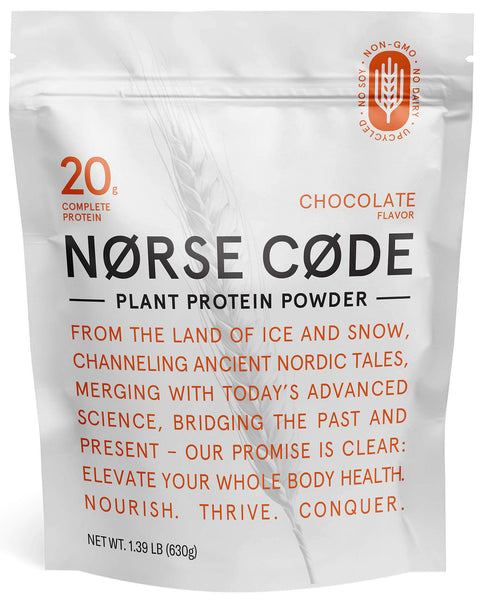
Mostly calories and fat, and whatever produce or whole food would have come with the meal. Ours runs 110 to 130 calories per scoop with 20g of protein, a real dent in your day's protein but a small fraction of a meal's calories. We built it to be a protein source; the rest of the plate is still yours to fill.
A meal-replacement product is formulated to hit a calorie target on its own. We formulated ours to hit a protein target and leave the rest of the meal up to you. Drink a scoop and call it lunch, and you'll likely be hungry again well before dinner.
What should you add to a protein shake to make it a full meal?
Fat and volume, mainly: a spoon of nut butter, a banana or a handful of oats, a milk or oat milk base instead of water. Each scoop already carries a bit of fat from MCT oil, so you're topping something up instead of starting cold.
The easiest version most people land on is a shake with oats blended or stirred in the night before, so it's ready in the morning without a blender. Frozen fruit does the same job cold. None of it takes long, and the shake still does the one job it's actually good at: the protein number.
Is protein powder the same thing as a meal-replacement shake?
No. A formulated meal-replacement shake, like Huel's, is meant to cover multiple meals a day for people who use it that way. NØRSE CØDE is a protein powder most people use once a day, alongside meals they're still eating normally, and we don't market it as a full-day replacement.
That's a labeling distinction with a real consequence: check what a product is actually formulated to replace before you build three meals a day around it.
How many calories are in a shake, and how does that compare to a meal?
One scoop of Chocolate runs 130 calories; Vanilla runs 110. Both carry 20g protein and 5g fiber. A typical meal runs several hundred calories once you count the plate, so one scoop alone lands well under that.
Two scoops would close most of the gap. At that point you're paying protein-powder prices for what a real meal delivers more cheaply, which is why one scoop plus real food, the way the section above describes, is the better trade.
Can you replace breakfast with a protein shake every day?
Plenty of people do, and stay with it, which is different from using it once when they're in a hurry. The people who keep it up long-term are usually the ones who like drinking it, rather than putting up with it.
One customer on that, in a five-star review: "This is the first plant protein powder I've tried that doesn't make me gassy or bloated. The chocolate tastes great and I drink it almost every day and still love it."
That shows up in a bag that gets finished and reordered instead of pushed to the back of a cupboard after a week.
What makes a shake more filling if you're using it as a meal?
Fiber and thickness do more of that work than the protein number does. Ours carries 5g of fiber per scoop from acacia, which also gives it body instead of a thin, watery texture. Mixing it thicker, with less liquid, adds to that.
It's a small lever and it's free: the same scoop in eight ounces of milk instead of twelve ounces of water is a noticeably heavier drink, before you've added anything else to it.
Is it okay to use a shake as a meal replacement when you're traveling or slammed for time?
Yes, and this is where it earns its keep. It dissolves in whatever you have, hot or cold, no blender, so a hotel room or a car is enough. In a blind taste test, more people chose NØRSE CØDE than Orgain and Optimum Nutrition Gold Standard combined, which matters more here than any other time you'd drink it: a bad-tasting stand-in for lunch gets skipped by day three.
A carry-on with a shaker bottle and one pouch covers three days of breakfasts without touching a blender or a hotel mini-fridge.
The bottom line
Most people land on the same routine: one shake on a day that's short on time, real food everywhere else. Add fruit or nut butter to it when you have five minutes to spare, and skip the add-ins when you don't. Reach for it again tomorrow if you liked it today.
For the deeper look at what's actually in the label and why, or the wider view of where NØRSE CØDE fits against other protein powders, those are the next two questions worth answering.
Ready to try it?
Backed by a 60-day money-back guarantee. If it is not the smoothest protein you have had, send it back.
Shop NØRSE CØDE