Ask a label reader whether pea protein is missing anything and you get a paper answer: yes, by a small margin, and blending fixes it. We build a pea, rice and barley blend for exactly that paper answer, so here's what "missing" means on the label and what it means in a glass.
Is pea protein missing an essential amino acid?
Pea protein covers eight of the nine essential amino acids in solid amounts and comes up short on one: methionine. It's a narrow gap, and it's the reason blended plant proteins exist in the first place. Standard protein-quality scoring puts pea protein just under top marks for that single amino acid, on an otherwise strong showing.
Which amino acid is pea protein short on?
Methionine, and pea protein runs a little low on its partner cysteine too. The branched-chain three that get the most attention in a post-workout shake, leucine, isoleucine and valine, are all covered at or above target. One amino acid runs short. The rest of the profile holds up.
Does blending pea with rice and barley fix the gap?
Yes. Rice and barley protein both run higher in methionine than pea does, so a blend of the three covers what pea alone leaves short. A gap-runner next to a gap-filler produces a profile neither hits alone. This is the actual engineering behind a protein blend, underneath the flavor and cost reasons people usually reach for first.
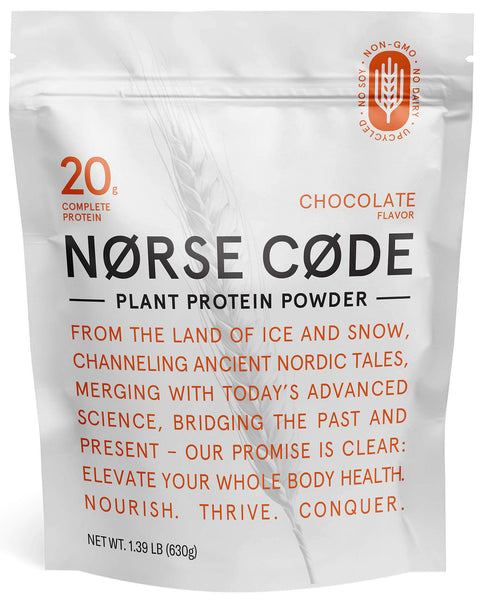
Why does NØRSE CØDE use three protein sources instead of one?
To close the amino acid gap inside the scoop itself. Pea, rice and barley took over a thousand iterations to land in a ratio that also mixes and tastes right, which turned out to be the harder problem to solve. The amino acid math was the easy part; getting a three-source blend to dissolve in cold water with a spoon took the other 999.
Does the amino acid question matter more than the protein number on the label?
Twenty grams of protein a serving is the floor we build to, whatever the source. The blend question is about what that 20 grams is made of. Clear the gram target first, then look at the blend: nine natural ingredients, allulose and monk fruit for sweetness, prebiotic acacia fiber, and no gums doing the mixing work instead.
Does any of this matter for how a shake actually feels day to day?
For most people, taste and texture decide whether a shake gets finished, and an amino acid table has nothing to say about either. One customer summed up the whole decision in four words:
"Love love love. Only protein I use."
NØRSE CØDE was also chosen over Orgain and a leading whey protein combined in a blind taste test, which is the part of the label an amino acid chart can't measure.
Conclusion
Pea protein's amino acid gap is real, narrow, and already solved by the reason blends exist in the first place. NØRSE CØDE's pea, rice and barley blend closes it inside the scoop, at 0g added sugar in both flavors, with no gums or fillers standing in for it. Our NØRSE CØDE vs. Orgain and NØRSE CØDE vs. Vega comparisons cover how that blend stacks up against what else is on the shelf, and our best vegan protein powder for bloating guide covers the gum question the amino acid question usually sits next to.
We make NØRSE CØDE ourselves, in our own facility in Petaluma, California, and it ships with a 60-day money-back guarantee, no questions asked.
Ready to try it?
Backed by a 60-day money-back guarantee. If it is not the smoothest protein you have had, send it back.
Shop NØRSE CØDE