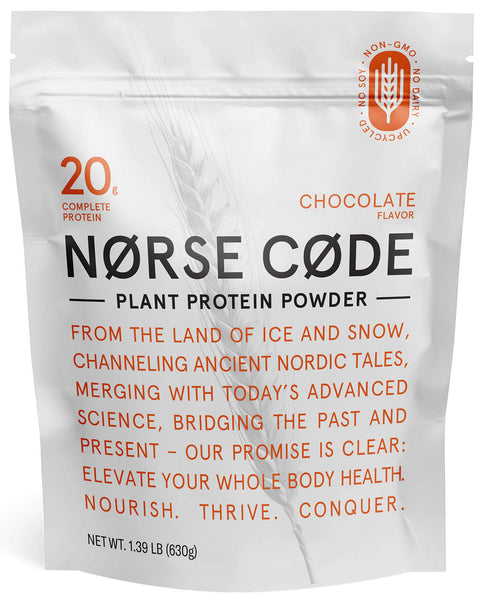
A half-used bag at the back of a cupboard is where most of the worry about protein powder dates starts. We make a plant protein ourselves, and the numbers below that are ours are its 18 months of shelf life at room temperature, unopened, and its 14 servings a bag. Everything else is general guidance that fits any brand.

Our protein
55% preferred it in a blind taste test. 20g protein per serving, no artificial sweeteners or fillers.
$49.99 for 1 bag, 14 servings. 60-day money-back guarantee, no questions asked.
Do protein powders expire?
Yes, in the sense that every bag carries a best-by date printed by the maker. Powder is dry, so it keeps far longer than fresh food. What changes over time is flavor and texture, and heat and steam change them faster than the calendar does.
The date is the maker's estimate of how long the powder stays at its best. It is a quality date. A bag stored in a cool cupboard can be fine well into its last months, and one that spent a humid summer beside the kettle, opened and closed a few times a day, can taste tired before the date arrives. Before you throw a bag out over its date, run the smell and pour check from the "gone off" answer below.
How long does an unopened bag of protein powder last?
Follow the date printed on your bag, which is usually somewhere between one and two years out. Ours has a shelf life of 18 months at room temperature, counted for a pouch with the seal unbroken. Once the seal is open, the clock runs faster.
When a bag arrives, read the date on it. A fresh one should have most of its shelf life still ahead of it. If you buy two, leave the spare sealed in a cupboard until the first is nearly empty. The spare keeps the shelf life printed on it while the open bag uses its own up, so the difference between the two grows with every week the spare waits. An open bag that you finish in a few weeks stays fine, and one left open for months at the back of a cupboard is the one to watch.
Where should you keep a bag of protein powder?
In a cool, dry cupboard at room temperature, away from the stove, the dishwasher and any sunny shelf. Close the seal after every scoop and keep the scoop dry. A pantry shelf at the other end of the kitchen from the kettle does better than the one beside it.
If your kitchen runs warm in summer, a hall cupboard or a bedroom shelf works fine. The first answer on this page covers why heat and steam matter, and the 18 months on our pouch is counted at room temperature, so an ordinary cupboard is the setting that number assumes. Two habits go with the bag wherever it lives. Write the date on the seal with a marker the day you open it, so that weeks later, standing in the kitchen with a half-used bag and unsure whether you opened it in March or April, you can read the answer off the pouch. Then squeeze the air out before you close it, since the powder keeps longer that way.
How can you tell a protein powder has gone off?
Smell it first. A sour, bitter or paint-like smell means it is past its best, and so does a shake that tastes flat or off. Lumps that stay hard under a spoon usually mean moisture got in. If you are unsure, bin it.
Then look. On a pouch of ours that is still inside its 18 months, the powder should pour loose and smell like the flavor on the label, cocoa in a chocolate bag and vanilla in a vanilla one. A few soft clumps that crumble under a spoon are ordinary and tell you less than the smell does, but a block that holds its shape, or a smell that differs from the day you opened the bag, means damp has got in. If the bag passes both, stir one spoonful into water and taste it before you mix a full shake.
Can you still use protein powder after the best-by date?
Often yes, when the bag was stored well and the date passed recently. A week or a month past usually still tastes as the maker intended, and a year past calls for a new bag.
- A week or a month past, with the bag stored well: use it as you normally would.
- Somewhere in between: run the check from the "gone off" answer above, then taste a spoonful in water before you build a smoothie around it.
- A year past: replace it. The flavor has probably flattened by then even when nothing looks wrong.
If the spoonful tastes off, don't drink the rest.
How much protein powder should you buy at once?
Buy what you will finish within a month or two of opening. One bag first is a sensible start, because it tells you whether you will still be scooping it in week three. Bigger bags make sense once you know the flavor suits you.
Do the division before you pick a size. Servings printed on the bag, divided by the scoops you take per day, gives the number of days it lasts once it is open. A bag of ours is 14 servings, so a scoop a day finishes it in two weeks, and a scoop three days a week takes a little under five. Past two months, the bag is larger than you need, and its back half will sit open in the cupboard for most of that time. A scoop a few days a week calls for a smaller bag than a scoop every morning.
Conclusion
The date on a bag is the maker's estimate of when flavor and texture start to slip, so the routine that follows from it is short: check the date when the bag arrives, write the opening date on the seal, and let a smell and a spoonful in water decide any bag that is past its date. One habit makes that last check easier. On the day you open a new bag, stir a spoonful into water and taste it, so that a flat or off taste weeks later has a first-day taste to be compared with.
A customer who bought a bag at a festival wrote: "I am currently using it every day as my morning shake, after my workout. I am a repeat customer!!" If the flavor turns out not to suit you, the 60-day money-back guarantee covers it.
Ready to try it?
Backed by a 60-day money-back guarantee. If it is not the smoothest protein you have had, send it back.
Shop NØRSE CØDE
---
Related reading: NØRSE CØDE against Orgain, against Vega, and our guide to choosing a protein powder.