Whey got a decades-long head start in gym bags. Whether a plant blend catches up splits into smaller questions: what's chemically different, whether blending fixes it, and whether a person keeps drinking it long enough to find out. Each question below answers one piece on its own.
Can plant protein build muscle as well as whey protein?
Yes, when it's built from more than one plant source. A blended plant protein supports muscle repair after training about the same way whey does. The bigger practical difference usually shows up in digestion and taste.
What decides whether either one actually helps is the same for both: enough total protein across the day, paired with resistance training.
What's the real difference between plant protein and whey for muscle building?
Whey is a dairy byproduct, separated out during cheesemaking. Most adults lose a good share of the enzyme that breaks down milk sugar sometime after childhood, and that decline is the actual mechanism behind a whey shake sitting badly: a lactose issue, showing up as the same bloating whether the whey comes from a $15 tub or a $60 one.
A plant blend never puts that enzyme to the test, since none of its ingredients touch milk. For someone whose gut tolerates dairy without issue, that difference never surfaces, and the two proteins perform almost identically. For someone who reacts to whey, this specific mechanism is usually the cause.
Does blending pea, rice and barley protein close the gap with whey?
Yes. A single plant source like pea alone tends to fall short on certain amino acids your body needs after a workout. Combining pea, rice and barley protein fills in what any one of them leaves out.
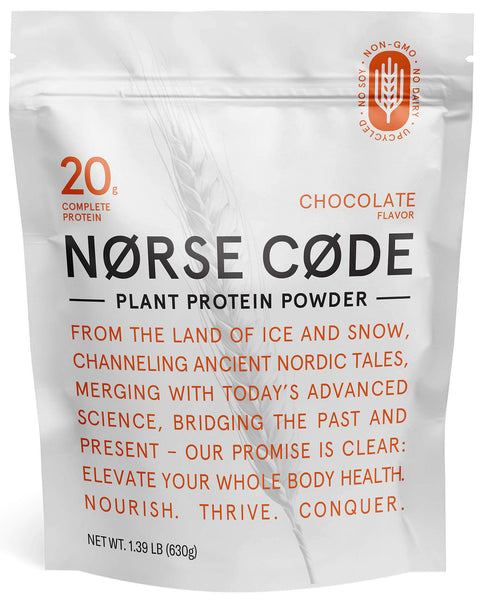
That's the blend we build from: pea, rice and barley protein, plus prebiotic acacia fiber, in a list of nine natural ingredients total. We sweeten it with allulose and monk fruit, with 0 grams of total sugar and 0 grams of added sugar in both flavors, and no sugar alcohol. Our guide to the best protein powder on the market walks through how a few honest plant-protein options compare on what's in them.
Does plant protein taste worse than whey?
A single-source pea protein with a strong flavor of its own is most people's first plant protein, and it built the category's reputation at the gym. The right combination of sources and sweeteners changes that outcome: in a blind taste test, more people chose NØRSE CØDE than Orgain and Optimum Nutrition Gold Standard 100% Whey Protein Powder combined.
Taste is only half of what someone actually decides on day to day. It stirs into milk or water with a spoon, no blender needed, and holds the same texture cold out of the fridge or stirred into a warm bowl of oatmeal. Those are the details that decide whether a bag gets finished or shoved to the back of the pantry after week two.
Is plant protein easier on your stomach than whey?
Often. Some plant proteins cause their own stomach issues, usually from the gums added to make them smooth, and a gum-heavy bag can bloat someone whose stomach never blinked at whey.
We skip the gums and add prebiotic acacia fiber, which feeds your gut. One customer put it better than we could: "This is the first plant protein powder I've tried that doesn't make me gassy or bloated. The chocolate tastes great and I drink it almost every day and still love it." If a past plant protein has ruled out shakes for you before, our guide for people with a sensitive stomach is built around exactly that.
Do you need more plant protein than whey to get the same result?
No. A 20-gram scoop of either does its job, whether it comes from a locker-room tub of whey or a bag of blended plant protein on a kitchen shelf. Doubling a plant scoop "to be safe" just spends more money for the same result.
Speed is where the two diverge: whey digests a little faster, which matters most in a tight window, like a shake right after a workout when it's the only thing in your system. Spread across a normal day of eating, that speed gap stops mattering for how much muscle either one supports.
Why do so many people say they quit plant protein and went back to whey?
Their first plant protein purchase is often a single-ingredient pea protein bought on price, and that one bag shapes their opinion of the whole category for years afterward. One customer held onto a flier from a Spartan race for an entire year before finally trying a bag, saying afterward it was smooth, clean, and tasted good enough that the wait had been unnecessary.
A single rough tub can outlast a lot of better options released since. Our side-by-side against Huel Black Edition compares a specific plant option against a familiar name, spec by spec.
Conclusion
Digestion is what tells you whether you need a change at all, and the sections above settle that on their own. What decides if a bag actually gets finished is more mundane: does the shake taste good enough, five days a week, that making it stays a habit past week two. Getting a plant blend to stop tasting the way plant protein used to took us more than a thousand tries over two years, in our own Petaluma facility. If this one still lands at the back of your pantry, the 60-day guarantee means that's on us.
Ready to try it?
Backed by a 60-day money-back guarantee. If it is not the smoothest protein you have had, send it back.
Shop NØRSE CØDE