"Sustainable protein powder" isn't a regulated term. Nothing stops a brand from printing it on the bag with no documentation behind it. Three things actually tell you something: a verified move on emissions (a Climate Neutral certification with a published offset number, a stated net-zero target), a packaging change you can name (less plastic, recycled material, a switch away from a rigid tub), and how the product is actually made (small-batch, local, self-manufactured versus large-scale contract manufacturing). A B Corp badge, a USDA Organic seal, and a supply-chain traceability program are real things. They describe labor practices, farming inputs, or supplier transparency. None of them measure a brand's environmental footprint. Here's how ten protein powders that lean on the word "sustainable," and our own, hold up against the three things that actually matter. Every certification and figure below was checked directly against the brand's own site or B Lab's public registry on 2026-08-14.
NØRSE CØDE
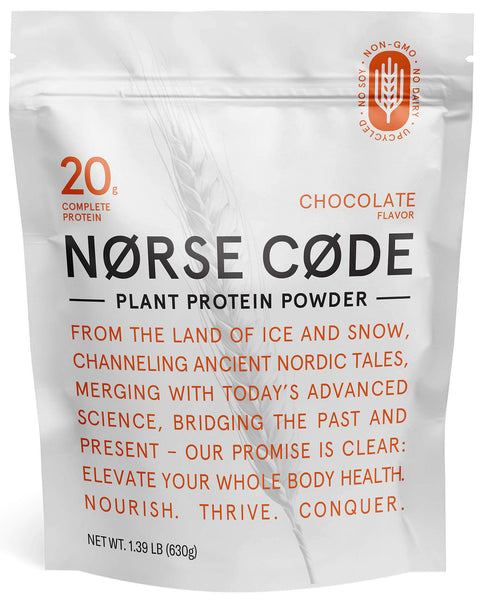
We make NØRSE CØDE ourselves, in our own small facility in Petaluma, California, the kind of setup where one person can walk the entire production line. That is the actual sustainability story here: a small company with Nordic roots, already treating doing more with less as the baseline. We ship it in a bag, sized for one product. Most of the brands on this list ship in a rigid plastic tub; ours doesn't. The ingredient list is short by design: 9 natural ingredients or less, no gums, no artificial sweeteners, no fillers, plus prebiotic acacia fiber. In a blind taste test, 55% of tasters preferred it.
Vega Essential Protein
Vega has set a 2030 target to eliminate plastic and a 2040 net-zero goal, according to the company. Both targets are still several years from their deadline.
Ritual Essential Protein Daily Shake
Ritual's stated packaging goal is 100% sustainable by 2025. The company's own reporting most recently put it at 74% of the way there.
Orgain Organic Protein Plant-Based Protein Powder
A 2020 packaging change cut Orgain's plastic use by roughly 30,000 pounds, according to the company's own reporting. That's a specific weight, tied to a specific year, exactly the kind of packaging change worth naming.
ALOHA Organic Plant-Based Protein Powder
ALOHA has held Climate Neutral certification since 2023 and says it offset 5,828 metric tons of CO2 that year. Its canisters switched from virgin steel to post-consumer recycled material back in 2021, a change the brand documented in its own "How ALOHA Became Climate Neutral" write-up.
Form Nutrition Performance Protein
Form Nutrition holds Ocean Positive and Climate Neutral certifications and offsets its emissions through SeaTrees, a coastal-ecosystem restoration nonprofit. Its pouches are EN-certified compostable and ship without a plastic scoop.
Huel Protein
Huel states its meals run about 50% lower carbon than the average US meal, a comparison the company reports on its own. It is the only emissions figure Huel publishes for this comparison.
Manitoba Harvest Hemp Yeah! Organic Plant-Based Protein Powder
Manitoba Harvest markets its hemp-and-pea blend on hemp's general land-and-water-use advantages, a category-level claim we couldn't independently trace to a brand-specific, audited figure. Beyond that claim, the brand's other credentials are B Corp, USDA Organic, and Non-GMO Project Verified status.
Sunwarrior Organic Plant-Based Protein
Sunwarrior's tubs are already made from post-consumer recycled plastic, and the company is in the middle of moving to biodegradable cardboard outer packaging with a compostable inner bag.
Nuzest Clean Lean Protein
Nuzest says its production water is recycled and its byproduct goes to animal feed and biofuel. Neither detail comes with a specific number or a third-party audit attached.
Sprout Living Epic Protein
Sprout Living's protein carries USDA Organic (through QAI), Non-GMO Project Verified, Certified Vegan, and Certified Kosher certifications. The brand doesn't publish a packaging change or an emissions figure to go with them.
Conclusion
The honest split: a few of these brands can point to a real, measured environmental move: a packaging change, a published emissions offset, a Climate Neutral certification. The rest lean on B Corp, USDA Organic, or a traceability program. Those describe labor, farming inputs, or supplier transparency. Check which kind of claim a brand is actually making before taking "sustainable" at face value.
Ready to try it?
Backed by a 60-day money-back guarantee. If it is not the smoothest protein you have had, send it back.
Ready to try it?
Backed by a 60-day money-back guarantee. If it is not the smoothest protein you have had, send it back.
Shop NØRSE CØDE